
You want websites that look great, load fast, and actually convert visitors into customers. In 2026 the web is faster, more competitive, and more AI-driven than ever, so choosing the right tools matters more than ever.
With the right mix of builders, form tools, automation, and AI assistants you can spend less time wrestling with tech and more time building what matters — stunning, fast, and conversion-focused sites. This guide highlights ten tools that cover design, forms, automation, lead gen, and AI-assisted development so you can pick the best fit for your projects.
Top Picks
|
Category |
Product |
Price |
Score |
|---|---|---|---|
|
🏆 Best For Complex Forms |
$99 |
93/100 |
|
|
💰 Best Budget Website Builder |
$69 |
94/100 |
|
|
🎯 Best For Enterprise Workflows |
$99 |
92/100 |
|
|
🚀 Best AI-Assisted Builder |
$69 |
79/100 |
|
|
⚙️ Best For Repetitive Task Automation |
$89 |
94/100 |
|
|
🎨 Best For Elementor Enhancements |
$69 |
97/100 |
|
|
🔰 Best WordPress Toolkit |
$49 |
94/100 |
|
|
📈 Best For LinkedIn Lead Gen |
$49 |
91/100 |
|
|
⭐ Best For No-Code Web Apps |
$59 |
89/100 |
|
|
🔐 Best For Simple, Secure Forms |
$49 |
100/100 |
How These Tools Were Selected
You need tools that balance design, performance, and real-world workflow needs. I evaluated each product for ease of use, visual/design flexibility, performance and hosting options, integrations (APIs, payments, CRMs), automation and AI features, support quality, and overall value.
I also considered specific strengths — for example, advanced form logic, AI-assisted site generation, drag-and-drop builders, lead-gen capabilities, and developer toolkits — so you can match a tool to the job at hand.
Formly is a no-code form builder that helps you create logic-driven, brandable forms, surveys, and quizzes without needing a designer. You can collect payments, route leads, and connect responses to your tools — handy for daily tasks like client intake forms, event RSVPs, or internal team requests, and useful for special projects like multi-step surveys, gated promos, or quiz funnels. The builder focuses on practical features (logic, points, payments, CNAME/white-label) and pairs that with responsive support.
The interface leans toward functional rather than flashy, so expect a bit of learning when you start complex logic, but you’ll get reliable results and good value compared to more expensive alternatives.
What People Say
Customers consistently praise Formly’s support and the platform’s ability to handle real-world, complex forms. Reviewers note it’s powerful for workflows and automation, while calling out UI rough edges and room for improved visual logic tools.
Overall Sentiment: Positive

🗣️ Sonick
I built complex, logic-driven forms with variables and a points system and it worked exactly as I needed. Support was quick and clear. Some interface bugs (text disappearing, cursor jumping) and logic visualization could be better, but the roadmap promises improvements and the price makes it a great deal compared to Typeform.
🗣️ khegdrm
Support was impressively fast and helpful during setup. The product felt intuitive and flexible, and the higher-tier features are worth it if you use forms for client intake, automation, or scaling workflows. Feels like a solid long-term tool rather than a temporary experiment.
Long-Term Cost Benefits
One-time pricing tiers make Formly a budget-friendly alternative to subscription-based form tools. If you need advanced features and heavy response limits, upgrading once can be cheaper over time than monthly plans from competitors. The built-in integrations and white-labeling reduce costs of extra tooling.
Return On Investment
You get fast ROI from reduced setup time, fewer tool subscriptions, and the ability to convert leads and take payments directly through forms. For agencies or businesses moving many forms over, the productivity gains and lower recurring costs outweigh the initial purchase.
Ease Of Use
|
Feature |
Ease Level |
|---|---|
|
Form Builder |
Moderate |
|
Logic Setup |
Challenging |
|
Design Customization |
Moderate |
|
Onboarding & Support |
Easy |
Usability
|
Aspect |
Ease Level |
Notes |
|---|---|---|
|
Templates |
Easy |
Ready-made starting points for common use cases |
|
Mobile Experience |
Easy |
Forms render well on phones and tablets |
|
Logic Visualization |
Challenging |
No graphical editor; logic is managed via dropdowns which can feel hard to follow |
|
Customization |
Moderate |
Good options but fewer styling controls than some competitors |
Performance & Speed
Fast and responsive for typical forms; complex forms with many conditions may require careful setup but perform well.
Integrations
|
Software |
Integration Quality |
|---|---|
|
Zapier |
Solid |
|
Stripe |
Native |
|
Webhooks |
Good |
|
CNAME / White Label |
Good |
Collaboration
Supports multiple workspaces and user seats on higher tiers, so teams can share forms, organize projects, and manage permissions without juggling separate accounts.
Reporting & Analytics
Includes built-in response analytics and export options so you can track conversions, response counts, and basic metrics. Connect to external analytics via integrations for deeper reporting.
Key Benefits
- Create logic-driven, multi-step forms without code
- Built-in payments and no-code integrations
- White-labeling and CNAME for branding
- Generous response limits on paid plans
- Highly responsive support and onboarding
Current Price: $99
Rating: 4.64 (total: 211+)
WebStarts is a drag-and-drop website builder that gets you online fast. You can assemble pages, add a simple store, and connect a custom domain without wrestling with hosting settings — handy for daily tasks like launching a portfolio, a small business site, or a quick landing page, and useful for one-off projects like event microsites or seasonal promos. It includes hosting and free business email, loads pages quickly, and even gives you separate editing for mobile so you can tweak layouts independently.
If you want an easy, budget-friendly way to publish clean, fast sites without deep technical setup, WebStarts is worth a look.
What People Say
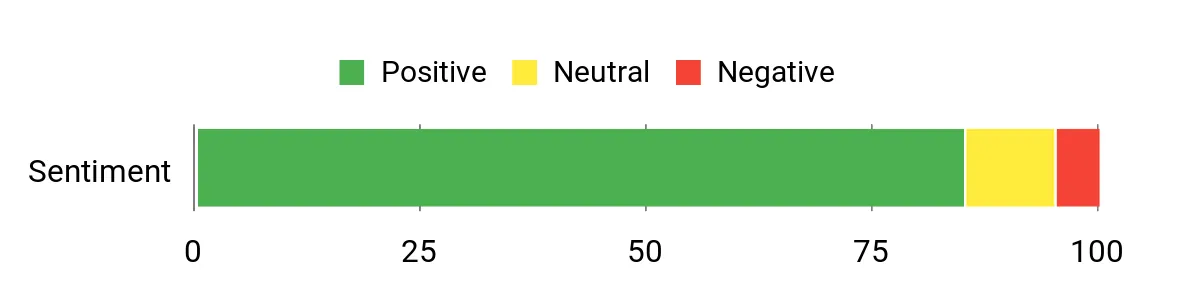
Users commonly praise WebStarts for being easy to use, fast to launch, and great value for lifetime hosting. Reviewers point out it’s ideal for simple sites and small stores, while noting power users may miss advanced customization and some team/support features.
Overall Sentiment: Positive
🗣️ mike83
I have just started diving into it, but WebStarts is definitely a good value. Generous limits and a straightforward Drag n Drop editor with built in ecommerce capability and free business email. If you need a very complex website, this isn’t the right fit, but excellent for most everything else.
🗣️ Beccy
WebStarts really is a gamechanger in website hosting. It is so easy to use and is literally set up and forget. Support was very responsive, image loading is always fast, and the separate editing for website and mobile made it simple to tweak mobile-specific layouts. Ridiculously cheap for lifetime hosting and saved me a lot over time.
Long-Term Cost Benefits
Because WebStarts bundles hosting, domain support, and email, you can skip recurring hosting fees and many add-on services. Over a few years that one-time cost can beat monthly subscriptions for simple business sites or multiple small client sites.
Return On Investment
Expect quick ROI from time saved building sites and lower recurring costs. For one-person businesses or agencies creating several static sites, the lifetime hosting and included features make it easy to recover the purchase quickly.
Ease Of Use
|
Feature |
Ease Level |
|---|---|
|
Editor (Drag & Drop) |
Easy |
|
Mobile Editing |
Easy |
|
Ecommerce Setup |
Moderate |
|
Onboarding & Tutorials |
Easy |
Usability
|
Aspect |
Ease Level |
Notes |
|---|---|---|
|
Templates |
Easy |
Basic but workable starting points; you can build from scratch if you prefer. |
|
Mobile Experience |
Easy |
Separate mobile editor helps you fine-tune layouts for phones. |
|
Localization |
Moderate |
Limited built-in localization for dynamic labels; some users request better translation controls. |
|
Image Handling |
Moderate |
Images load fast, but control over focal point and WebP handling can be limited. |
Performance & Speed
Pages load quickly and uptime is solid for most sites, though some reviewers flagged occasional render-blocking issues for very complex pages.
Integrations
|
Software |
Integration Quality |
|---|---|
|
Built-in Ecommerce |
Good |
|
Custom Domains |
Solid |
|
Business Email |
Included |
|
CDN (AWS CloudFront) |
Good |
Collaboration
Basic account-level management; great for solo users and small teams, but lacks advanced multi-user permissions and team workflows found in larger platforms.
Reporting & Analytics
Includes basic uptime and performance reliability in practice; for in-depth analytics you’ll want to connect an external analytics tool.
Key Benefits
- True drag-and-drop editor for fast page building
- Built-in ecommerce and free business email
- Hosting and custom domains included
- Separate site and mobile editing for easier mobile tweaks
- Fast page loads and reliable uptime for simple sites
Current Price: $69
Rating: 4.72 (total: 342+)
Formaloo is a flexible form and workflow builder that leans into automation so you can stop babysitting routine tasks. You can design multi-page forms, add conditional logic, and trigger emails or alerts when responses come in — handy for everyday needs like lead capture, client onboarding, or appointment requests, and useful for one-off projects like event registrations or sequential signature approvals. If you need deeper control, Formaloo supports API-driven dropdowns, white-label portals, and integrations (Zapier is a common pairing). Expect a bit of a learning curve for advanced flows, but once you get the hang of it you can save time and reduce manual follow-ups.
What People Say
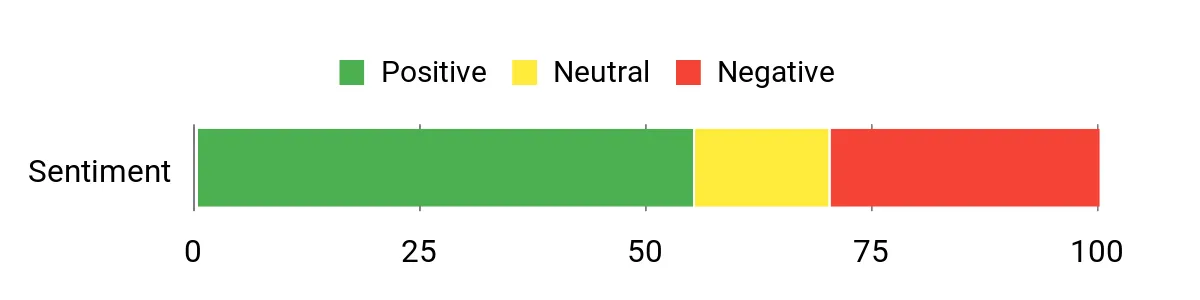
Users appreciate Formaloo for saving time with automation (alerts, triggers and auto-emails) and for niche features like sequential signatures or API-driven dropdowns. At the same time, several reviewers flag a fiddly form builder, styling quirks, and occasional support delays — so expect trade-offs between power and polish.
Overall Sentiment: Mixed
🗣️ carrie75
Clean, professional-looking forms with many answer types, multi-page options, conditional logic, auto-sent responses, and alerts — those features lifted a lot of the manual work for my solo wellness business.
🗣️ GauravBR
A solid, long-term tool for lead gen and contact forms that matured over time; reliable in real projects and backed by helpful support for many users.
Long-Term Cost Benefits
If you use forms heavily for lead capture, onboarding, or repeated workflows, automating those touchpoints reduces manual hours and follow-ups. Over time that can offset subscription or one-time costs, especially if you replace multiple niche tools with Formaloo plus a Zapier connection.
Return On Investment
You’ll often see ROI from reduced admin time and fewer missed responses. For solo operators or small teams that rely on forms for client intake or sales funnels, the time saved and smoother handoffs to CRMs and automations can recover the cost relatively quickly.
Ease Of Use
|
Feature |
Ease Level |
|---|---|
|
Form Builder |
Moderate |
|
Templates & Styling |
Hard |
|
Advanced Logic & Calculations |
Moderate |
|
Onboarding & Tutorials |
Easy |
Usability
|
Aspect |
Ease Level |
Notes |
|---|---|---|
|
Templates |
Moderate |
Looks clean but styling controls can be limited; some layout tweaks require CSS. |
|
Responsive Editing |
Moderate |
Forms are responsive but the editor can reload or stutter when resizing windows. |
|
Integrations & UTM Handling |
Moderate |
Can capture UTM parameters and work with Zapier, but setup isn’t intuitive and embeds may block UTM in some scenarios. |
|
Support & Help |
Moderate |
Lots of articles and videos available; direct support experiences vary by user. |
Performance & Speed
Generally usable, but a number of users report occasional slow loads or editor reloads when changing window sizes — worth testing on your setup before committing to complex builds.
Integrations
|
Software |
Integration Quality |
|---|---|
|
Zapier |
Good |
|
Custom API Dropdowns |
Good |
|
CRMs (via Zapier/API) |
Good |
|
Embeds/UTM Capture |
Fair |
Collaboration
Supports white-label portals, role-based access, and sequential multi-signature workflows for approval chains — useful if you need signed approvals or branded client areas. It’s more geared to small teams and clients than full enterprise team workflows.
Reporting & Analytics
Basic response lists and export options are solid for everyday tracking, and you can capture metadata like UTM parameters with the right setup. For heavy analytics you’ll likely pipe data to your analytics stack or CRM.
Key Benefits
- Powerful conditional logic and multi-page workflows
- Auto-responses and alerts to cut down manual follow-up
- Wide variety of answer types and responsive templates
- API-powered dropdowns and Zapier-friendly integrations
- White-label portals and enterprise-grade security options
Current Price: $99
Rating: 4.6 (total: 199+)
Greta is an AI-driven web builder that helps you turn ideas into working apps and landing pages fast. You’ll describe what you want, pick from ready-made UI pieces, and the AI scaffolds the app — often enough to get a prototype or internal tool live in minutes.
It’s especially handy for everyday tasks like building dashboards, admin panels, or simple client-facing pages, and it also shines for special projects such as MVPs or one-off internal tools where speed matters. You get one-click deployment, common integrations (Stripe, Supabase, analytics, email), and an interface that feels approachable even if you’re not a developer.
Be mindful of the credit-based system — it’s great for rapid iteration, but heavy experimenting can use credits quickly. If you want fast results and fewer manual steps, Greta is a solid pick to get a site or app off the ground.
What People Say
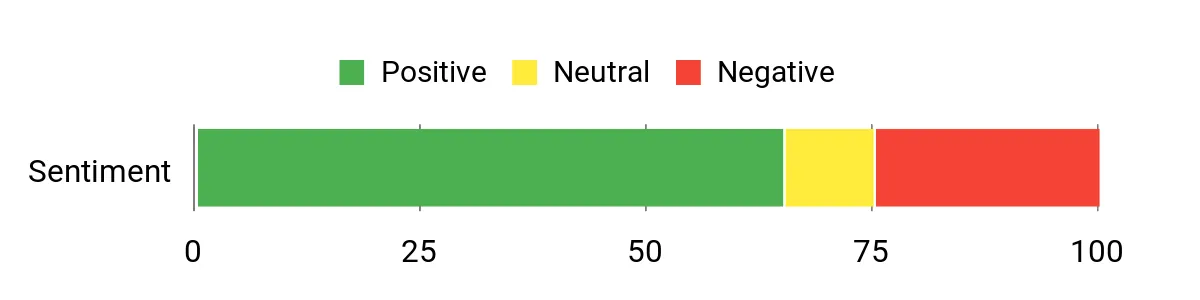
Users commonly praise Greta’s speed and the way its AI scaffolds projects — it’s frequently called ideal for MVPs, dashboards, and internal tools. Several reviewers note that the interface is easy to follow and that integrations and deployment work well.
At the same time, customers flag credit consumption and occasional support or workflow hiccups as things to watch.
Overall Sentiment: Mixed
🗣️ Avinash.Katta
Very fast to build full apps — Greta helps you go from idea to a working MVP quickly. The interface is clean, the AI fills in the structure, and integrations like Stripe and Supabase make projects practical. One-click deployment removes hosting headaches.
🗣️ gero.manthey
Saved a lot of time compared with manual builds. With a Level 3 plan (1,500 credits) I could create multiple substantial tools; using Claude 4.5 gave good results and the platform made complex ideas accessible without deep coding.
Long-Term Cost Benefits
If you regularly build prototypes or internal tools, Greta can cut development time and the need to hire developers for simple projects. Over time that reduction in labor and faster time-to-feedback can offset subscription or credit costs, especially if you use the tool for repeated internal workflows instead of one-off heavy builds.
Return On Investment
You’ll likely see ROI through saved developer hours and faster iterations. For solo builders and small teams focused on prototypes, dashboards, or landing pages, the time saved on setup, integrations, and deployment tends to cover the cost quickly — provided you manage credit use and avoid excessive trial-and-error.
Ease Of Use
|
Feature |
Ease Level |
|---|---|
|
Project Setup |
Easy |
|
AI Templates & Scaffolding |
Easy |
|
Editing & Customization |
Moderate |
|
Support & Troubleshooting |
Hard |
Usability
|
Aspect |
Ease Level |
Notes |
|---|---|---|
|
Templates |
Moderate |
Templates are practical and speed up builds, but you may need manual tweaks for production-grade styling. |
|
Deployment |
Easy |
One-click deployment is straightforward and removes hosting complexity for most projects. |
|
Credits Management |
Moderate |
Credits power AI actions; they’re generous at higher tiers but can run down quickly during experimentation. |
|
Support & Documentation |
Moderate |
Documentation exists, but some users report delayed or frustrating support experiences for billing or workflow questions. |
Performance & Speed
Generally fast for generating projects and one-click deploys. Some users note that repeated edits or complex iterations can feel credit-heavy and occasionally require multiple runs to get the desired output.
Integrations
|
Software |
Integration Quality |
|---|---|
|
Stripe |
Good |
|
Supabase |
Good |
|
Analytics tools |
Good |
|
Email providers |
Good |
Collaboration
Greta supports team workflows, but some reviewers ran into friction when adding team members or changing billing — expect to check plan details if you share access across multiple users.
Reporting & Analytics
Basic analytics and integration with common tracking tools are available; for deep analytics you’ll likely forward events to your existing stack or analytics provider.
Key Benefits
- Rapid prototyping: turn ideas into working apps in minutes
- Ready-made UI components to speed up design
- One-click deployment so you don’t wrestle with hosting
- Useful integrations (Stripe, Supabase, analytics, email)
- AI-driven scaffolding that reduces manual wiring
Current Price: $69
Rating: 4.2 (total: 190+)
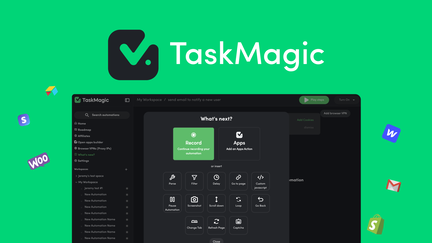
TaskMagic helps you automate repetitive web workflows by recording a process once and replaying it reliably. You can use it for everyday work—updating content, batch form submissions, scraping small datasets, or routine QA checks—and for special moments like launching a marketing page or pushing coordinated content updates across multiple sites.
The recorder feels approachable even if you’re not a developer, and the editor gives you enough control to tweak steps when things don’t go exactly as planned. If you find yourself doing the same browser tasks over and over, TaskMagic can shave off hours and reduce mistakes—handy for solo creators and small teams alike.
What People Say
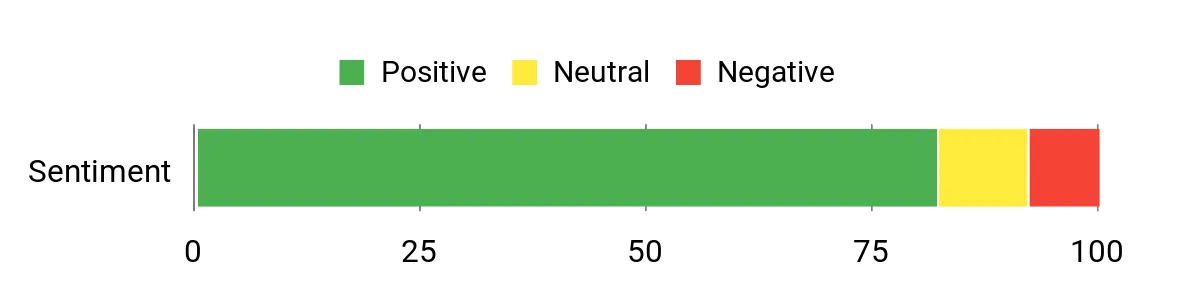
Users often highlight how much time TaskMagic saves on boring, repeatable tasks and appreciate that the recorder is easy to use. Feedback typically mentions reliability when re-running automations, and people like that small edits in the editor fix edge cases without rebuilding flows.
Overall Sentiment: Positive
Long-Term Cost Benefits
Over time you’ll recoup costs by cutting down manual labor—less time spent on repetitive site updates and fewer mistakes that need fixes. For teams that run frequent content changes or client updates, those saved hours add up into meaningful operational savings.
Return On Investment
You can expect ROI through reduced manual hours and fewer support tickets related to human error. For freelancers and small teams, the time saved on recurring tasks often outweighs the subscription within a few months.
Ease Of Use
|
Feature |
Ease Level |
|---|---|
|
Recording Setup |
Easy |
|
Automation Editor |
Moderate |
|
Scheduling Runs |
Moderate |
|
Error Handling |
Hard |
Usability
|
Aspect |
Ease Level |
Notes |
|---|---|---|
|
Browser Compatibility |
Moderate |
Works with major browsers, but some complex sites may need manual tweaks. |
|
Script Management |
Moderate |
Organizing and versioning flows is possible but can get messy if you have many similar scripts. |
|
Scheduling & Triggers |
Easy |
Basic scheduling is straightforward for recurring tasks. |
|
Support & Documentation |
Moderate |
Documentation covers common workflows; support is helpful but can be slow for niche issues. |
Performance & Speed
Runs are generally quick for typical page interactions; heavier pages or complex loops can take longer and may need retries. Overall responsiveness is solid for routine tasks.
Integrations
|
Software |
Integration Quality |
|---|---|
|
Web builders (Webflow, Wix, WordPress) |
Good |
|
Zapier / Automation platforms |
Moderate |
|
APIs / Webhooks |
Moderate |
|
CMS Platforms |
Good |
Collaboration
You can share automations with teammates and maintain a library of flows. Permission controls exist but are basic, so coordinate who edits shared scripts to avoid conflicts.
Reporting & Analytics
TaskMagic provides run history, success/failure logs, and basic metrics so you can spot flaky steps. It’s enough to troubleshoot common issues, though deeper analytics require external tooling.
Key Benefits
- Record once, replay anywhere to remove repetitive browser work
- Saves time on content updates, QA, and data entry
- Accessible recorder for non-developers, with editor for fine tuning
- Useful for both one-off launches and daily maintenance
- Reduces human error and keeps workflows consistent
Current Price: $89
Rating: 4.69 (total: 184+)
If your WordPress site feels a bit basic and you want to lift it without juggling a dozen plugins, ElementsKit is a compact toolkit for Elementor that brings a huge library of building blocks. You get 90+ widgets, 45+ templates, 14 modules, and hundreds of ready-made sections that let you assemble headers, footers, mega menus, sticky sections, and parallax effects without custom code. For everyday use you’ll appreciate faster page assembly, reusable sections, and conditional content that helps personalize pages.
For special projects—launching a campaign landing page or building a multi-page client site—the templates and widget builder speed up delivery. There are some quirks (occasional compatibility issues and a few pro-only gates), but if you’re comfortable troubleshooting small conflicts or rely on an agency workflow, ElementsKit can seriously reduce the time you spend wiring up common features and make your site look more polished.
What People Say
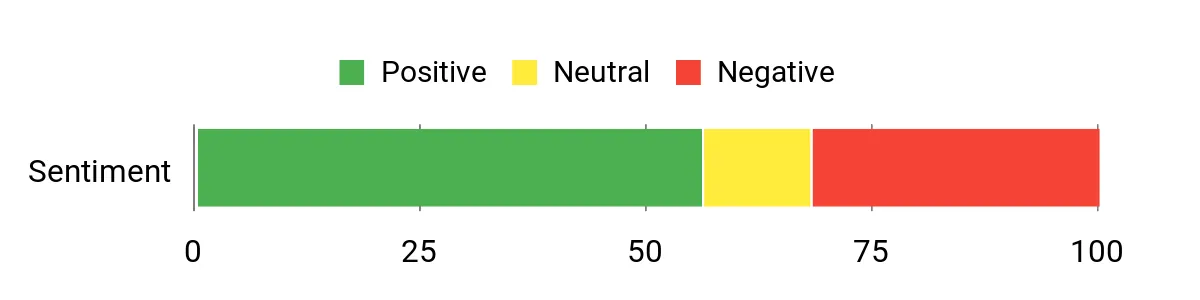
Users praise the breadth of creative widgets and templates—things like the circle menu and conditional content get regular shout-outs. At the same time, feedback often mentions support slowdowns, occasional bugs with certain pro features, and the need to toggle or troubleshoot when conflicts show up.
Overall Sentiment: Mixed
🗣️ brigitte77
I bought Tier 2 and am running it on 12 domains. In most cases the Pro version doesn’t create problems with Elementor; when it did there was a missing PHP line that caused crashes, but disabling Pro fixed it. Overall it’s beneficial and packed with options.
🗣️ assla
Of the many creative options, I like the circle menu the most. The conditional content feature stands out — it gives you flexible ways to show different content based on conditions.
Long-Term Cost Benefits
By consolidating multiple UI features into a single plugin, you can reduce the number of paid add-ons and speed up project delivery. For freelancers and agencies that build similar layouts repeatedly, that efficiency lowers development time and ongoing plugin management costs.
Return On Investment
If you use the templates and widgets to speed up builds, you’ll likely recoup the purchase through saved hours. The ROI is strongest for developers and small agencies who reuse sections and deliver multiple sites.
Ease Of Use
|
Feature |
Ease Level |
|---|---|
|
Setup & Install |
Moderate |
|
Widget Configuration |
Moderate |
|
Template Import |
Easy |
|
Widget Builder |
Moderate |
Usability
|
Aspect |
Ease Level |
Notes |
|---|---|---|
|
Elementor Compatibility |
Moderate |
Generally works well but occasional conflicts or missing PHP lines have been reported. |
|
Learning Curve |
Moderate |
Lots of options can be overwhelming at first, but templates and docs help. |
|
Performance Impact |
Moderate |
Enabling many modules/widgets can add weight; selectively activate what you need. |
|
Support & Documentation |
Hard |
Documentation exists, but some users report slow or patchy support responses. |
Performance & Speed
Performance depends on how many modules and widgets you enable. When used selectively it’s fine for most sites; activating everything or many pro-only elements can slow page loads and require optimization.
Integrations
|
Software |
Integration Quality |
|---|---|
|
Elementor |
Excellent |
|
WordPress Core |
Good |
|
Third-Party Plugins |
Moderate |
|
Other Page Builders |
Limited |
Collaboration
Collaboration happens through your normal WordPress workflow—roles, staging sites, and shared libraries. There aren’t built-in team collaboration tools inside the plugin itself, so coordinate licenses and staging workflows across your team.
Reporting & Analytics
ElementsKit doesn’t provide analytics; it focuses on UI building. Use your usual analytics or performance tools to measure impact and page speed.
Key Benefits
- Huge library of widgets and templates to speed up design
- Build headers, footers, mega menus and sticky sections without custom code
- Conditional content and creative widgets like the circle menu
- Widget builder lets you craft custom components
- Reduces the number of additional plugins you need
Current Price: $69
Rating: 4.83 (total: 185+)
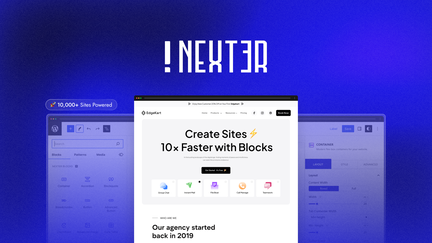
Nexter is a lightweight, modular WordPress toolkit that helps you build polished sites faster. You get 90+ blocks, a big template library, and an extensions bundle that replaces several utility plugins so projects stay lean.
For everyday work it speeds up routine pages, reusable sections and header/footer tweaks; for special projects—client sites or campaign landing pages—the starter kits and block library cut down assembly time. The modular approach means only the parts you use load on the front end, which keeps pages snappy.
Support is active and the team listens, so you’re not left guessing when something feels off. If you value speed, fewer plugins, and a future-friendly workflow, Nexter is worth checking out.
What People Say
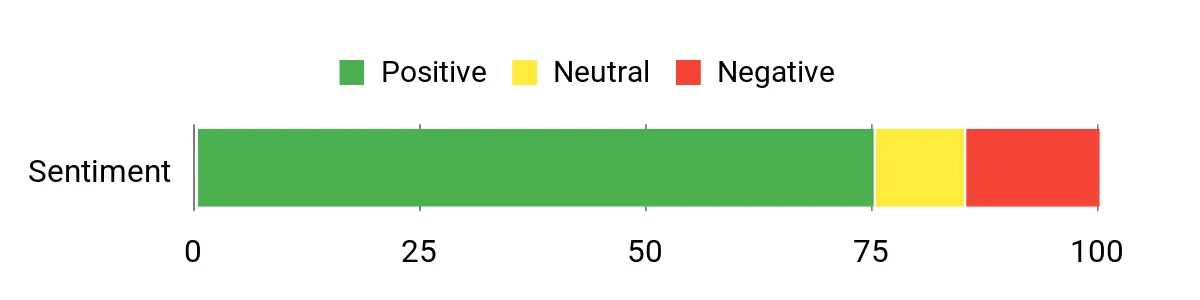
Users commonly praise Nexter’s speed and the usefulness of the block and template library. Many highlight that the extension consolidates features they previously handled with several plugins, keeping projects lighter. A few users mentioned confusion over template access, but support has responded directly to resolve those issues.
Overall Sentiment: Positive
🗣️ fgk
Nexter balances speed and flexibility — the Nexter Extension replaced several plugins I used to rely on, and the block/template library is well structured and actually useful. The team is responsive and improves things based on feedback.
🗣️ mbpf.adservice
The extension lets me ditch plugin clutter. It’s built for speed, clean, and includes templates and 90+ blocks plus a security booster — perfect for quicker, lighter builds.
Long-Term Cost Benefits
By replacing several paid or maintenance-heavy plugins with a single toolkit, you cut down recurring plugin costs and simplify updates. If you build multiple sites, the time you save on assembly and troubleshooting also reduces billable hours or project turnaround time.
Return On Investment
If you reuse templates, blocks, and the extension features across projects, you’ll likely recoup the purchase quickly through saved hours and reduced plugin overhead. ROI is strongest for freelancers, agencies, and students working on many sites.
Ease Of Use
|
Feature |
Ease Level |
|---|---|
|
Setup & Install |
Moderate |
|
Block Library |
Easy |
|
Template Import |
Easy |
|
Extensions Configuration |
Moderate |
|
Theme Customization |
Moderate |
Usability
|
Aspect |
Ease Level |
Notes |
|---|---|---|
|
Learning Curve |
Moderate |
Lots of blocks and options are powerful but take a short time to get familiar with. |
|
Modularity |
Easy |
You enable only what you need, which keeps interfaces and front-end weight down. |
|
Performance Impact |
Easy |
When used selectively it’s fast; replacing several plugins helps page speed. |
|
Support & Documentation |
Moderate |
Team is active and responsive, though some users reported initial confusion around template access. |
Performance & Speed
Nexter is built with performance in mind: modules load only when activated and the extension consolidates common utilities, which reduces plugin bloat and helps page loads stay quick. Heavy use of many templates or third-party integrations may still need optimization.
Integrations
|
Software |
Integration Quality |
|---|---|
|
WordPress Core |
Excellent |
|
Gutenberg (Block Editor) |
Excellent |
|
Third-Party Plugins |
Moderate |
|
Other Page Builders |
Limited |
Collaboration
Collaboration relies on standard WordPress workflows—user roles, shared staging sites, and exportable templates. There aren’t built-in multi-user design tools, so coordinate licensing and staging across your team.
Reporting & Analytics
Nexter focuses on building and performance; it doesn’t include analytics. Use your usual analytics and performance tools to measure traffic and page speed.
Key Benefits
- Large block and template library (90+ blocks) speeds up builds
- Modular design loads only what you use, improving performance
- Replaces multiple utility plugins via Nexter Extension
- Good for both quick personal projects and client sites
- Active developer team that responds to feedback
Current Price: $49
Rating: 4.69 (total: 107+)
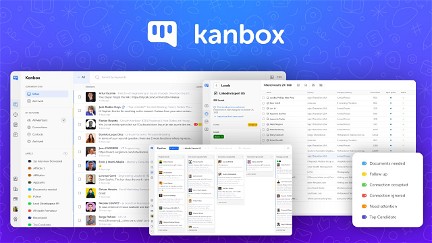
Kanbox bundles LinkedIn scraping, verified email discovery, CRM-style lead management, and a smart inbox into one tool so you don’t have to juggle five separate apps. You can pull leads from searches, posts, events and Sales Navigator, clean duplicates automatically, and refine lists in a lead manager before exporting or messaging.
For day-to-day work it’s handy when you’re running outreach sequences or cleaning contact lists; for special projects—recruiting drives, targeted sales campaigns, or event follow-ups—it helps you keep everything organized and move faster. Expect a friendly inbox experience with bulk actions and a full-screen chat for context. A few users report occasional slowness and some Mac hiccups, and certain automation features may be gated behind specific plans, but if you want to consolidate scraping, email finding, and basic CRM into one workflow, Kanbox is a solid, time-saving option.
What People Say
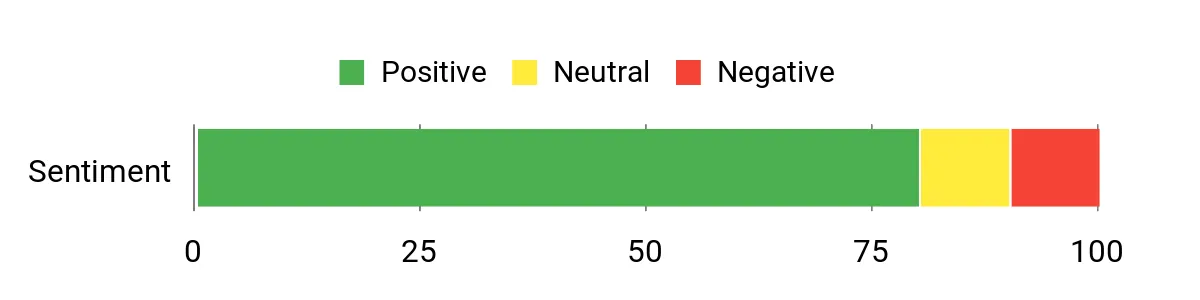
Users often highlight that Kanbox reliably extracts quality leads and that the support is responsive and helpful. Common notes mention occasional slowness, Mac-specific bugs for some users, and that advanced automation may require higher-tier plans.
Overall Sentiment: Positive
🗣️ Paul2030
I have been using Kanbox for 2-3 months now. Sometimes product is a bit slow for me and for friends too but when it work, it works really well. One thing that was a constraint is how many leads you can scrape using LinkedIn free tier. Nonetheless, this is a good tool for someone who is doing linkedin campaign
🗣️ David_Bay
Most apps require some learning and the quality depends a lot on the support. The support for this app is very good. I have yet to put in the time it deserves but will shortly start cleaning up my lists and I have even been offered a one on one consult to get it ready for campaigns very shortly.
Long-Term Cost Benefits
Kanbox replaces several niche tools—scraper, email finder, a light CRM and inbox—so you can cut recurring subscriptions. For teams or frequent prospectors, consolidating functions into one app reduces tool overhead and administrative friction.
Return On Investment
If you run regular LinkedIn campaigns, the time saved on scraping, de-duplicating, and outreach can pay back the purchase quickly. ROI is strongest for recruiters, sales teams, and small agencies; limits imposed by LinkedIn’s free tier can cap volume unless you upgrade.
Ease Of Use
|
Feature |
Ease Level |
|---|---|
|
Setup & Install |
Moderate |
|
Lead Scraper |
Easy |
|
Inbox & Lead Manager |
Moderate |
|
Automation Configuration |
Moderate |
|
Export & CSV |
Easy |
Usability
|
Aspect |
Ease Level |
Notes |
|---|---|---|
|
Learning Curve |
Moderate |
Plenty of features to learn, but the main flows (scrape → clean → message) are straightforward. |
|
Data Quality |
Easy |
Users report clean, non-duplicated exports and reliable email discovery. |
|
Platform Stability |
Moderate |
Some users notice occasional slowness and a few Mac-specific bugs. |
|
Support & Help |
Easy |
Support is frequently mentioned as responsive and helpful, including one-on-one help offers. |
Performance & Speed
Kanbox usually handles scraping and list operations well, but a few reviewers have reported occasional slowness during heavy use. Scrape limits from LinkedIn’s free tier can also affect throughput.
Integrations
|
Software |
Integration Quality |
|---|---|
|
LinkedIn / Sales Navigator |
Excellent |
|
Email Finder Services |
Good |
|
CSV / CRM Export |
Good |
|
Other Prospecting Platforms (e.g., Twitter) |
Limited |
Collaboration
Kanbox offers shared lead lists, labels and pipeline-style management so small teams can coordinate outreach. It’s not a full multi-user workspace like enterprise CRMs, but it covers basic handoffs and shared lists.
Reporting & Analytics
Basic reporting is handled through list filters, labels and exportable lead lists. There aren’t advanced analytics dashboards, so pair Kanbox with your analytics or CRM for campaign-level performance tracking.
Key Benefits
- All-in-one LinkedIn scraping, email finding, messaging and lead management
- Cleans duplicates and returns verified professional emails
- Smart Inbox with filters, labels and bulk actions
- Export-ready lead lists and basic CRM pipelines
- Lifetime deal options reduce recurring subscription stacking
Current Price: $49
Rating: 4.56 (total: 96+)
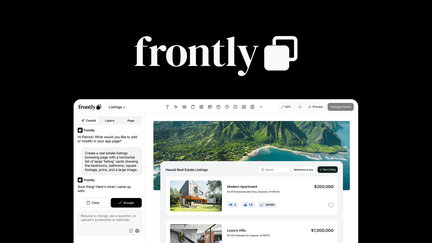
Frontly helps you turn ideas into working web apps without writing code. You’ll get a drag-and-drop editor, AI-assisted components, and quick deployment so you can spin up landing pages, internal tools, event microsites, or MVPs in a fraction of the usual time.
For day-to-day use it’s great for prototyping, client demos, and small business sites; for special projects—like launching a product beta or building an internal dashboard—you’ll appreciate how fast you can iterate. It’s approachable enough if you don’t code, but flexible enough to connect to data and automations when you need them.
If you want to move from concept to live app quickly, Frontly is a friendly, practical option to try.
What People Say
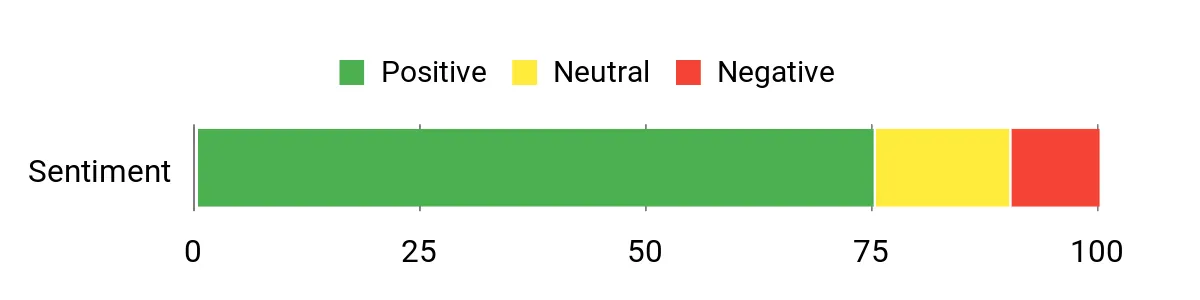
Users commonly note how fast they can get a working app live and how the templates speed up the process. Many mention it’s ideal for prototypes and small business use, while a few point out that advanced data bindings take a bit more time to master.
Overall Sentiment: Positive
Long-Term Cost Benefits
Frontly reduces the need to hire developers for small projects and trims the time you spend on setup and deployment. That can mean fewer recurring development hours and quicker time-to-market—especially useful for freelancers, agencies, and founders testing ideas.
Return On Investment
If you regularly build landing pages, demos, or internal tools, the time savings alone can cover the purchase quickly. ROI is highest when you use it to replace small one-off dev tasks or to prototype features before investing in custom builds.
Ease Of Use
|
Feature |
Ease Level |
|---|---|
|
Setup & Templates |
Easy |
|
Editor & Drag-and-Drop |
Easy |
|
AI Assistant |
Easy |
|
Data Binding & Back-End |
Moderate |
|
Deploy & Publish |
Easy |
Usability
|
Aspect |
Ease Level |
Notes |
|---|---|---|
|
Learning Curve |
Moderate |
Basic app flows are intuitive, but advanced integrations and data logic need time to learn. |
|
Template Quality |
Easy |
Templates cover common use cases and speed up initial builds. |
|
Mobile Responsiveness |
Moderate |
Responsive controls exist, but you may need tweaks for complex layouts. |
|
Support & Documentation |
Easy |
Docs and community resources help smooth the learning curve. |
Performance & Speed
Pages and prototypes render quickly in most cases; very complex apps or large datasets can introduce some lag, so test performance as you scale.
Integrations
|
Software |
Integration Quality |
|---|---|
|
Zapier |
Good |
|
Webhooks |
Good |
|
Custom APIs |
Moderate |
|
CMS / Data Sources |
Moderate |
Collaboration
You can share projects and preview links with teammates or clients for feedback. It covers basic collaboration needs, though it’s not a full enterprise multi-user workspace with granular roles.
Reporting & Analytics
Frontly provides basic usage and preview logs; for deeper analytics you’ll want to attach Google Analytics or your analytics stack after publishing.
Key Benefits
- No-code, AI-assisted app building for fast prototypes
- Drag-and-drop editor with prebuilt templates
- Quick deployment and hosting without server setup
- Connects to data sources and supports webhooks
- Lower upfront costs compared with custom development
Current Price: $59
Rating: 4.46 (total: 95+)
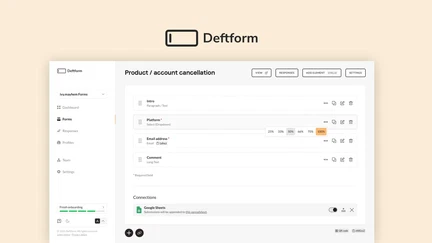
Deftform makes building and automating forms feel… easy.
You get a clean form builder with an AI assistant, unlimited responses, custom domains, and Stripe payments so you can set up surveys, sign-ups, or order forms without wrestling settings. For day-to-day use it’s great for intake forms, support queues, and course signups; for special projects—like event registrations or sales funnels—you’ll appreciate the automation, webhooks, and API access.
It’s approachable if you want something that just works, but powerful enough to plug into the rest of your stack. If you want a low-friction form tool that won’t get in your way, Deftform is worth trying.
What People Say
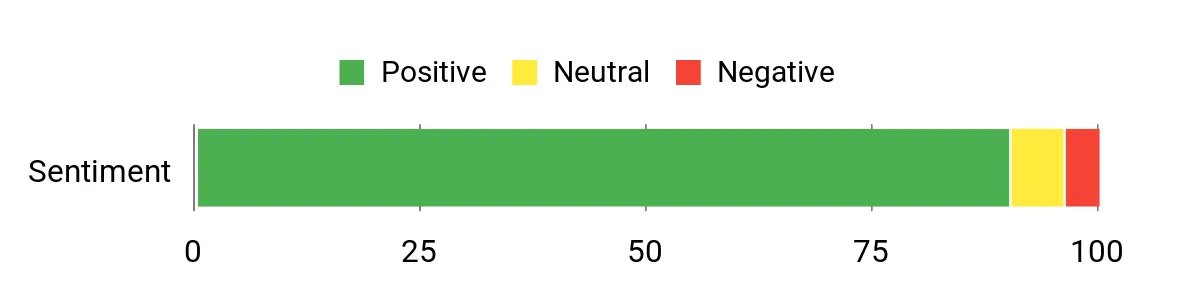
Users often mention how fast they can get a form live and how the clean interface makes everyday tasks pleasant. People praise the AI form builder, straightforward integrations, and responsive support, especially given the price point.
Overall Sentiment: Positive
🗣️ OroSitesHosting
Fantastic product at a very low price. The UI is clean and pleasant, support is responsive, and the tool has been reliable over time—easy to recommend even if you already use another form builder.
🗣️ lairdminty
Easy to learn and set up, with nice integrations and a surprisingly good AI form builder. The dashboard is smooth and the options are practical without being overwhelming.
Long-Term Cost Benefits
At the current price you avoid recurring high subscription fees for many form platforms. The combination of unlimited responses, built-in payments, and automation reduces the need to stitch together multiple paid tools—so over time you save both money and management overhead.
Return On Investment
If you regularly collect leads, payments, or registrations, Deftform pays for itself quickly through time saved on setup and fewer tools to manage. ROI is highest when you replace multiple niche services (forms + payments + hosting) with one streamlined tool.
Ease Of Use
|
Feature |
Ease Level |
|---|---|
|
Setup & Templates |
Easy |
|
Form Builder UI |
Easy |
|
AI Form Builder |
Easy |
|
Integrations & Webhooks |
Moderate |
|
Publish & Custom Domain |
Easy |
Usability
|
Aspect |
Ease Level |
Notes |
|---|---|---|
|
Learning Curve |
Moderate |
Basic forms are quick to create; advanced automations and API use take a bit more time. |
|
Customization Options |
Moderate |
Good styling and scripts support, though very deep theming is limited for now. |
|
Mobile Responsiveness |
Easy |
Forms render well on mobile out of the box. |
|
Support & Documentation |
Easy |
Responsive support and clear docs reported by multiple users. |
Performance & Speed
Forms load quickly and handle submissions reliably; large exports or heavy API traffic may need standard rate and performance checks as you scale.
Integrations
|
Software |
Integration Quality |
|---|---|
|
Webhooks |
Excellent |
|
Stripe (Payments) |
Good |
|
API Access |
Good |
|
Zapier / Automation Tools |
Moderate |
Collaboration
Includes team management for shared access and basic permissions so you can collaborate on forms and view submissions together, suitable for small teams and agencies.
Reporting & Analytics
Built-in exports and basic response management cover most needs; for deeper analytics you can export data or push it to your analytics stack via webhooks or API.
Key Benefits
- Unlimited forms and responses so you don’t worry about caps
- AI-assisted form builder speeds up setup
- Custom domain + SSL and CNAME support for professional branding
- Payments via Stripe and file uploads for practical workflows
- Webhooks, API access, and exports for automation and reporting
- Team management and basic collaboration tools
Current Price: $49
Rating: 4.99 (total: 77+)
FAQ
How Do I Choose The Right Tools For My Website Project?
You should start by being crystal clear about the job you need done: a marketing landing page, a client portal, a data-collection workflow, or a full-stack web app each demands different strengths. Match The Tool To The Job: if forms and conditional workflows are central, consider Formly at $99 or Deftform at $49; if you want a simple drag-and-drop hosted site WebStarts at $69 is fast to launch; if you want AI-driven app scaffolding look at Greta ($69) or Frontly ($59); for WordPress-heavy workflows Nexter ($49) or ElementsKit ($69) fit well. Evaluate support responsiveness, integration options, export and backup capabilities, and any usage limits or credits (Greta uses credits) before buying, and always test core workflows with a free demo or trial so you don’t discover a missing feature mid-build.
Will These Tools Work Together And How Do I Handle Integrations And Data Portability?
You’ll get the best results by choosing tools that offer APIs, webhooks and native connectors so your site can pass data cleanly to CRMs, analytics, and automation platforms; prioritize tools that allow CSV exports and direct webhooks for reliable backups and migrations. Many form builders like Deftform and Formly support payments and webhooks out of the box, while tools such as Formaloo may require careful embedding to preserve UTM or query parameters, so test embeds and tracking early.
For white-labeling pick products with CNAME support, and for privacy pick vendors that document GDPR/ENCRYPTION features; in short, make sure webhooks and exports are available and run a short integration test before committing.
What Common Pitfalls Should I Avoid When Buying Lifetime Deals Or Low-Cost Builders In 2026?
Watch out for hidden upsells, limited support, and feature gaps: some offers lock templates or advanced features behind extra payments, and other products have slow or sparse support responses which can leave you stranded if something breaks. Check recent user reviews for notes about stability and support, confirm refund and redemption windows, verify any monthly or credit-based limits (credits can run out quickly on AI builders), and test SEO behavior and hosting specifics—some tools generate hash-based URLs or have embedding quirks that hurt search and tracking.
Before you stack codes or migrate critical sites, check support and refund policy, test critical workflows in a staging environment, and keep an exit plan that includes data export and a migration path.
User Favorites
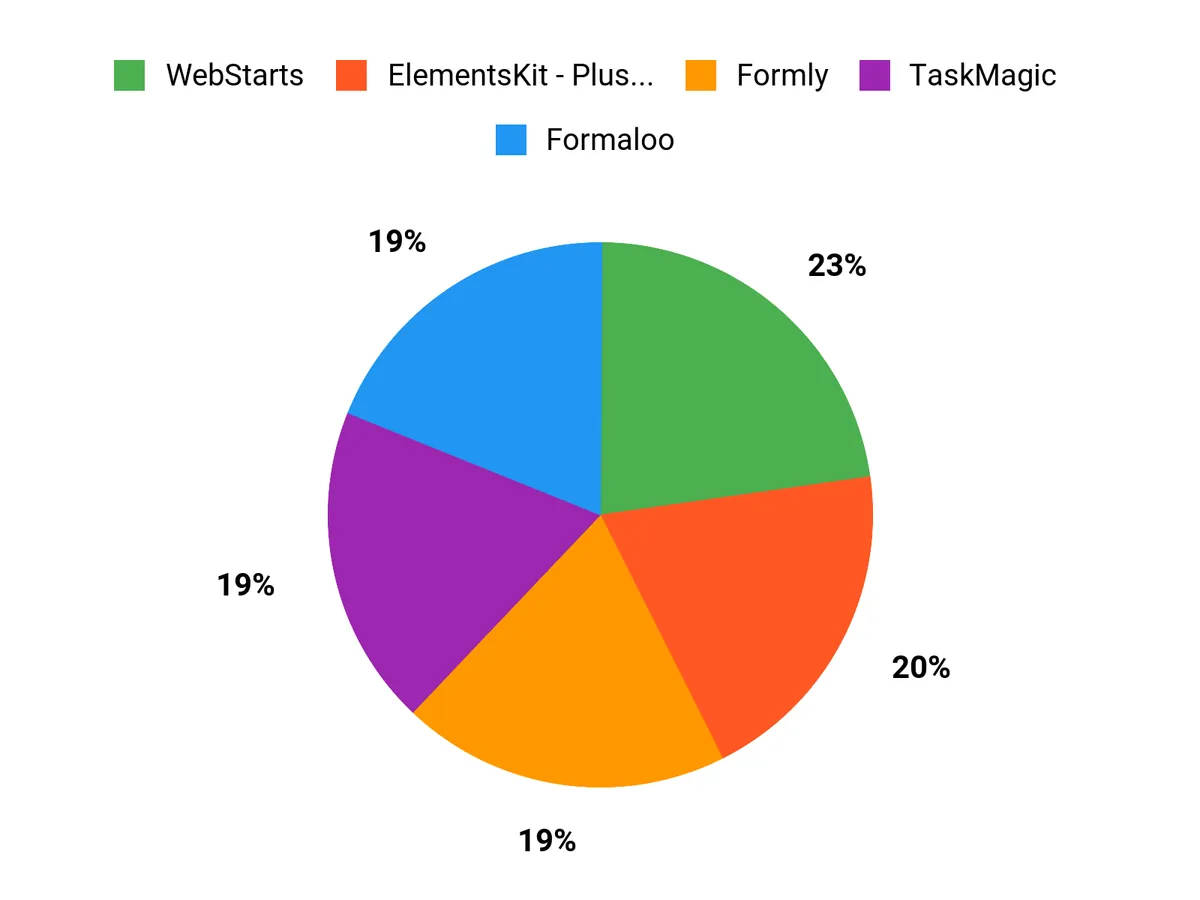
When you’re choosing between Formly, WebStarts, and Formaloo you mainly prioritize ease of use, how much control you get over templates and customization, and how well the tool connects to your forms, databases, and automations — plus straightforward pricing and reliable support. If you care most about advanced form logic and data workflows you’ll lean toward Formly or Formaloo, while if you want a fast drag-and-drop site builder with hosting and polished templates you’ll usually pick WebStarts.
Wrapping Up
By 2026 you’ll get the biggest wins by combining a strong visual builder, reliable form / data tools, and automation that removes repetitive work. Pick a primary builder (WebStarts, Nexter, Greta, or Frontly) depending on whether you want hosted simplicity, WordPress control, or AI-assisted apps. Layer in a best-fit form tool (Formly, Deftform, or Formaloo) and add automation/lead-gen (TaskMagic, Kanbox) where you need scale.
Focus on choosing tools that let you iterate quickly and keep your site fast and secure — pick 1–2 tools to master and focus on speed, UX, and automation so you ship better sites, faster.
| Formly – Forms, Surveys & Quizzes | WebStarts | Formaloo | |
|---|---|---|---|
 |
 |
 |
|
| Rating | 4.8/5 (211 reviews) | 4.6/5 (342 reviews) | 3.4/5 (199 reviews) |
| Primary Highlights |
|
|
|
| Ease Of Use | Intuitive interface with a learning curve. Good support resources available. | User-friendly with straightforward setup; limited templates. | Learning curve with some usability issues reported. |
| Best For |
|
|
|
| Pricing Plans |
|
One-time fee of $69 for lifetime access. |
|
| Buy Now | Buy Now | Buy Now |
This Roundup is reader-supported. When you click through links we may earn a referral commission on qualifying purchases.